
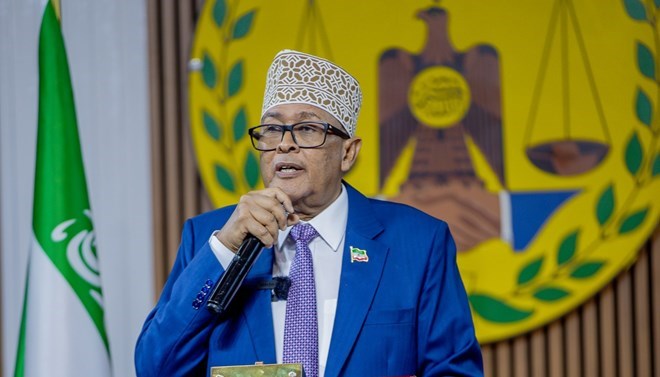
On 21 February, Khadar Hussein Abdi, the presidency minister of the self-declared independent state of Somaliland, said that Somaliland is willing to give the US exclusive access to its mineral resources.
- Somaliland is hoping to capitalise on the growing desire of the US to erode China’s influence over global critical supply chains to attract US investment.
- Despite Somaliland’s critical mineral potential, its mining sector is undeveloped, and the viability of reported critical mineral deposits is still uncertain.
- This, coupled with the reluctance of the US to upset political and security dynamics in Somalia, which claims sovereignty over Somaliland, will undermine Somaliland’s efforts.
- Nonetheless, Somaliland will prioritise legal and institutional reforms to its mining sector in hopes of attracting alternative trade partners.
Seeking recognition
Abdi also said that Somaliland is willing to host US military bases. He suggested that the same would be offered to other international partners, including Israel, which became the first country to recognise Somaliland on 26 December 2025. Following this, Somaliland sent its first delegation to Israel on 23 February. According to Israeli media, the delegation comprised several high-ranking officials, including the Director General of the Somaliland Water Ministry, Aden Abdullah Abdullah. Abdullah and his colleagues met with their Israeli counterparts to discuss a framework for collaboration, especially regarding technology sharing in the agricultural and water sectors.
Anecdotal evidence suggests that Somaliland may be endowed with a wide range of minerals, including cobalt, titanium, lithium, and gold. Somaliland’s Minister of Energy and Minerals, Ahmed Jama Barre, said on 8 June 2025 that Somaliland had awarded a “large-scale” lithium mining licence to a Taiwanese company earlier that year. Barre added that this ministry is in talks with this firm to establish a battery manufacturing plant in Somaliland. However, independent mining exploration is limited in Somaliland, and the commercial viability of the alleged deposits is still unclear.
Seeking capital
Somaliland will intensify its efforts to attract foreign investment in its mining sector. Despite the sector’s potential, it remains largely undeveloped, dominated by artisanal miners and a few commercial gemstone producers. Somaliland is keen to diversify its economy away from livestock exports, which are vulnerable to climate shocks. As part of this, the government is keen to boost productivity in the mining sector with the aim of increasing the sector’s contribution to revenues, employment, and foreign earnings.
Securing capital for the development of industrial mining and associated infrastructure will be a growing priority for Somaliland. The government has a friendly attitude towards foreign investors and has demonstrated a growing political will to harmonise and modernise the regulatory framework. Nonetheless, uncertainties regarding Somaliland’s international status and particularly Somalia’s strong opposition to Somaliland’s claims of independence have hampered investor confidence. Somaliland is hoping to utilise the US’s critical mineral drive to attract US investment, in hopes that the US’s diplomatic power will provide some cover for potential investors. Somaliland is also hoping that it will be able to rely on Israel, a key ally of the US, to facilitate discussions.
Unfavourable geopolitical conditions
The desire of the US to erode China’s control over global critical mineral supply chains has boosted US investor interest in Africa, boosting the bargaining power of countries such as the DRC, which is endowed with critical minerals. However, Somaliland is unlikely to benefit in the same way, at least not in the next few years. Unlike the DRC, Somaliland does not have an established commercial mining sector, and the viability/size of its mineral deposits is still unclear. Developing the sector would require major long-term investments in exploration activities, as well as complementary infrastructure. Convincing US investors to take this risk will be difficult, especially because, unlike the DRC, Somaliland does not have a strong history of trade with China that can be leveraged against the US. Moreover, the US will most likely remain reluctant to engage directly with Somaliland due to concerns that perceived meddling in the sovereignty dispute between Somaliland and Somalia could complicate counter-terrorism operations in eastern Africa. This is especially true given that most African countries, including allies of the US such as Kenya, are opposed to Somaliland’s claims of independence.
In this context, Somaliland’s mining is unlikely to receive an influx of US investment in the coming years. In the meantime, Somaliland will prioritise institutional reforms to formalise the mining sector and boost geological research capacity. Somaliland will seek to attract alternative partners, especially middle powers in the Gulf, eliciting strong reactions from Somalia. Both Somalia and Somaliland will take more deliberate measures to advance their positions through international litigation and extensive lobbying. Although this will lead to diplomatic spats and, potentially, proxy violence in the next few years, in the longer-term, it will increase the prospects of certainty regarding Somaliland’s status.
Sources
Somaliland is willing to give the US access to minerals and military bases, says minister, France24.
First official Somaliland delegation visits Israel, tours wastewater recycling plant, Jerusalem Post
For tailored analysis on Somaliland’s quest for independence, please contact Africa Investigates Incorporated.
Email: africainvestigates2020@gmail.com
Tel: +221785282247