On 22 March, AFP reported that hundreds of Islamist fighters were released from jail in Mali’s capital, Bamako, amid negotiations between the authorities and Islamist militant group Nusrat al-Islam (JNIM).
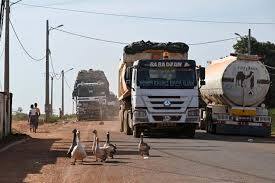
- The release of the prisoners is intended to discourage further attacks by JNIM on fuel tankers and end the acute fuel shortages that have plagued the country since September 2025.
- However, in our view, these concessions are likely to further embolden JNIM in the next few weeks, meaning that attacks on fuel tankers remain likely, even as negotiations continue.
- In the long term, the Malian government will have little choice but to re-engage with regional and international partners to obtain security support, as its army grapples with serious capacity constraints.
- In the meantime, operators in Kayes, Nioro du Sahel, and Bamako will continue to face serious security threats and operational challenges.
Temporary truce
According to AFP, the government agreed to release the prisoners as part of its efforts to end a fuel blockade that has crippled the country since September 2025, when JNIM began to carry out regular attacks on fuel tankers. On 10 March, Human Rights Watch said that JNIM had attacked a convoy of 40 fuel trucks in late January, killing at least 10 truck drivers and two apprentices. The convoy was accompanied by a military escort. AFP also reported that the government and JNIM had agreed on a temporary truce until Eid al-Adha, a Muslim religious celebration set for the end of May.
Vicious cycle
The temporary truce and the concessions given by the Malian government are unlikely to end the fuel blockade, even if they result in reduced JNIM attacks over the next few weeks. By agreeing to JNIM’s demands, the Malian government has publicly acknowledged its inability to defeat the group or curb attacks along the main fuel supply chains. Indeed, the government is grappling with serious financial woes that have hindered the capabilities of the army, especially following the withdrawal of French troops from the country in 2022.
Moreover, the prolonged fuel blockade has further hampered public sentiments towards President Assimi Goïta, who took power after a coup d’état in 2021, and undermined the legitimacy of his transitional government. Fearing that this could embolden dissidents in the fragmented army, Goïta will have little choice but to offer more concessions to JNIM in exchange for an end to the fuel blockade. However, sensing their increasing bargaining power, JNIM is likely to be emboldened by these concessions. In this context, we expect further attacks on fuel tankers in the next few weeks, especially as JNIM seeks to expedite the release of high-profile militants.
Diplomatic considerations
Meanwhile, Goïta will seek a rapprochement with regional partners such as Côte d’Ivoire and, to a lesser extent, Nigeria over the coming year. In particular, he will be keen to benefit from security collaboration with these countries to repel JNIM from major supply chain routes, leveraging these countries’ fears of a spillover. More broadly, Mali and its Sahelian neighbours, Burkina Faso and Niger, will seek to restore relations with the international community in the coming year, especially as they seek US funding for their joint anti-terrorism force, dubbed the United Force of the Alliance of Sahel States (FU-AES). However, progress will be slow, as continued military rule in the three countries sustains tensions with regional and international partners. Mali will need to foster some semblance of democracy, for instance by holding an election, to secure tangible security support, especially from the West.
Business implications
In the meantime, the security situation in Kayes, Nioro du Sahel, and Bamako will remain volatile, and operators will remain vulnerable to serious security threats and logistical challenges.
Meanwhile, to curb budget deficits, the authorities will intensify their tax collection drive in the coming weeks. This will expose businesses in the mining and agricultural sectors to major scrutiny, extortion, and intimidation.
Sources
Mali: Armed Islamist Group Executes Truck Drivers, Human Rights Watch
Jihadist prisoner release secures fuel convoy truce in Mali, Africa News
For tailored analysis on threat of terrorism in Mali, please contact Africa Investigates Incorporated.
Email: africainvestigates2020@gmail.com
Tel: +221785282247