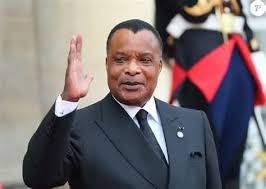
On 15 March, the Republic of Congo held its presidential election, amid reports of low turnout.
- Denis Sassou Nguesso is the clear front-runner, given the dominance of his ruling Congolese Labour Party (PCT) and the weakness of the opposition.
- The results are likely to be contested by the opposition, amid allegations of foul play.
- This is likely to drive localised unrest over the next few weeks, exposing operators to a brief period of disruption, especially because an internet shutdown is likely.
- Although sporadic rebel attacks cannot be ruled out in Pointe-Noire, we expect election-related tensions to subside over the coming months, sustaining policy continuity.
- Nonetheless, the PCT will grapple with mounting fragmentation, as different factions attempt to position themselves for the presidency. This could present a challenge should 82-year-old Nguesso die in office, potentially triggering a coup d’état in the coming years.
Electoral integrity
Vote counting began on 15 March, and the Independent National Electoral Commission (CNEI) is expected to announce the results in the next two weeks. Nguesso, who has ruled for 42 years, is running against five other candidates. However, none of Ng’s opponents has a high national profile, as the two main opposition groups, the Union of Humanist Democrats (UDH – Yuki) and the Pan-African Union for Social Democracy (UPADS), boycotted the elections, citing concerns about the integrity of the process.
In addition, the two most prominent opposition leaders, Gen Jean-Marie Mokoko and André Okombi Salissa, are in prison. They were convicted in 2018 and 2019, respectively, for undermining state security and sentenced to 20 years in prison. Mokoko and Salissa both ran against Nguesso in the 2016 presidential election. The poll escalated into violence after unknown gunmen attacked the capital, Brazzaville, a few days after the election, prompting a crackdown on Ninja rebels. The 2021 elections were less disruptive, but they were accompanied by similar allegations of foul play.
In this context, and amid persistent calls by opposition leaders for electoral reforms, the government held a national dialogue from 16 to 18 February. This culminated in the introduction of new measures to foster transparency, including the mandatory representation of opposition candidates during the compilation of votes. The regional media have reported low turnout at most polling stations.
Moderate security threats
Nguesso is likely to secure victory in the first round. His regime faced mounting criticism due to rampant corruption and slow socio-economic development in recent years. However, Nguesso has successfully prevented the emergence of a credible opponent through a mixture of co-option and repression. This has allowed him to entrench his control over state institutions, making oversight of the polls extremely difficult.
These dynamics also mean that his likely victory will be highly contentious, especially in the context of the 2015 constitutional amendments that will allow him to remain in office until 2031, when he will be 87. His regime has alienated a large portion of the population, especially in the South, where communities such as the Lari feel marginalised due to the political and economic influence of Nguesso’s Mboshi group.
Fearing that Nguesso’s win could further prolong their exclusion from the government, these groups are likely to stage protests in the coming weeks. These are likely to be disruptive, especially in Brazzaville and Pointe-Noire, where anti-PCT sentiment is especially elevated. The security forces will most likely be able to contain the unrest within a week or two, but they are likely to rely on repressive methods, including an internet blockade, further exposing operations to logistical issues. We also expect the security forces to erect roadblocks in Brazzaville and Pointe-Noire, potentially exposing local and foreign staff to harassment and bribery demands.
Meanwhile, despite signing a peace deal with the government in 2017, some Ninja factions remain active in the Pool region. They will attempt to exploit these tensions to destabilise the government, especially as they seek to expedite the Disarmament, Demobilisation, and Reintegration (DDR) process, which has been slowed by financial shortages. Consequently, localised attacks by Ninja-affiliated militias cannot be ruled out in the next few months. These could expose operators to incidental security threats, but they will be brief, as they elicit strong responses from the security forces.
Succession to remain the biggest threat to stability
More broadly, political tensions will remain elevated even after normal government business resumes. In particular, competition to succeed Nguesso will hamper cohesion in the PCT, especially given the president’s advanced age. Different members of his inner circle have attempted to position themselves for the post, eliciting a backlash from veteran members of the party. To preserve his relationship with the latter, Nguesso has stalled the matter, but he can no longer afford to do so given his advanced age.
Building consensus on a successor will be a priority for Nguesso during his fifth term. In our view, the most viable figures for the role are: Nguesso’s son Denis-Christel Nguesso, his nephew Jean-Dominique Okensa, and his cousin Jean-Jacques Bayou. Grooming one of these will be difficult, as they face resistance from PCT hardliners, but Nguesso will leverage access to his patronage network to prevent escalations.
Moreover, despite the growing competition, there is a shared desire among PCT members, who are mostly ethnic Mboshis, to ensure that the party retains power. This is likely to prevent mass defections from the party or a civil war. However, a coup d’état would be likely in the event that Nguesso dies or is incapacitated in office. His inner circle has a strong command of the military and would most likely install a preferred leader to bypass PCT internal deliberations. Although this would cause an impasse and potentially a resurgence of the Ninja rebellion, in our view, this would not escalate into a full-blown civil war.
Corruption and economic diversification
In any case, we expect corruption to worsen over the coming years, as the distribution of patronage becomes more important to sustain the PCT regime. Although Nguesso is likely to embark on an anti-graft campaign, this will largely be symbolic. Businesses will be increasingly exposed to influence peddling and bribery demands, as well as political interference in the enforcement of regulations.
Nguesso’s victory will ensure policy continuity, boosting economic diversification efforts. Congo will remain mostly reliant on the oil and gas sector for revenue and foreign exchange, but we expect slow growth in the agricultural and manufacturing sectors.
Sources
Congo begins vote count as President Denis Sassou N’Guesso eyes fifth term, Africanews
Republic of Congo election: Who is running and what’s at stake? Al Jazeera
For tailored analysis on political and economic reforms in the Republic of Congo, please contact Africa Investigates Incorporated.
Email: africainvestigates2020@gmail.com
Tel: +221785282247