Uganda’s Ministry of Information has banned live broadcasts of “riots” ahead of the 15 January general elections, a move critics fear signals a broader crackdown.
- The government has restricted Starlink internet services and a pattern of violence against opposition figures is increasing, including the detention of veteran leader Kizza Besigye.
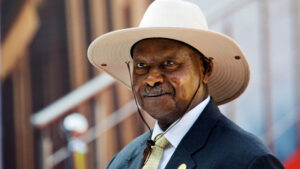
- President Yoweri Museveni, 81, is poised to secure a seventh term, leveraging the ruling National Resistance Movement’s (NRM) superior resources and control over state institutions.
- The elections will likely be marred by allegations of foul play, sparking protests in urban opposition strongholds like Kampala, Jinja, and Arua.
- We expect election-related unrest to subside within 1–2 weeks after election day, ensuring broad policy continuity across most sectors.
Heigtened tensions
The ministry claims that the ban is intended to prevent an escalation of election-related tensions. However, sections of the local civil society are worried that the move could pave the way for censorship and heavy repression during the elections. This is especially because on 2 January, Starlink, a US-based internet provider, restricted its services in Uganda pursuant to a presidential order. Museveni’s main contender, Robert Kyagulanyi (“Bobi Wine”), claims that the order is part of Museveni’s campaign to stifle free expression and “persecute” his opponents. The Uganda Communications Commission has denied this, saying that the government has no plans to restrict the internet ahead of the polls.
Amid these tensions, veteran opposition leader Kizza Besigye of the Forum for Democratic Change (FDC) is still under arrest and facing treason charges. He was detained under unclear circumstances in neighbouring Kenya in November 2024 and has repeatedly been denied bail. The FDC nominated long-serving MP Nathan James Nandala Mafabi for the presidential elections.
Meanwhile, reports of violence against opposition leaders, critics, activists, and journalists have intensified in the last year. Most recently, police assaulted a local journalist covering a Kyagulanyi campaign rally in Kween District (Eastern Uganda) on 5 January.
Déjà vu
Like the 2021 elections, the upcoming polls are likely to be marred by violence. Despite the restrictive measures imposed by the government, protests are likely to occur, especially in opposition strongholds in the capital Kampala and parts of the Eastern region. Unlike older populations, younger Ugandans—most of whom did not live through the bush war of 1980–1986—do not hold the NRM in high regard. This demographic constitutes over 71% of the total population and is overwhelmingly affected by unemployment and harassment by the security forces. Youths attribute this to structural weaknesses resulting from the dominance of the NRM. The NRM continues to serve the interests of its long-serving members, most of whom are former rebel fighters or leaders, and has struggled to woo this important section of the electorate. Regular corruption scandals involving senior NRM officials, and multiple reports of human rights abuses against the youth, have further hampered the legitimacy of the party among young Ugandans.
This section of the population is likely to be wary of irregularities during the polls, leading to protests in the coming weeks. Indeed, as the NRM’s structures are intertwined with those of the state, the electoral process will be prone to undue influence, leading to allegations of foul play. Opposition leaders will be keen to exploit the general frustration with the NRM’s regime to mobilise youths against suspected rigging.
Despite the UCC’s assurances to the contrary, further restrictions to internet access—including a total internet shutdown—and media freedom are likely as election day approaches. These will limit the extent of opposition mobilisation and the scale of protests. However, even localised protests against suspected rigging have a high risk of turning into large-scale incidents of violence due to the heavy-handed tactics of the security forces. For instance, the security forces are likely to use live bullets to disperse crowds in opposition strongholds, further angering youth groups and leading to clashes. Criminal gangs are likely to take advantage of the ensuing chaos to loot local businesses and vandalise property, further worsening the situation.
In the same vein, the NRM, which retains strong control of the security apparatus, will intensify its authoritarian stance against opposition leaders, leading to mounting reports of violence, torture, and killings of opposition leaders over the coming weeks. This is likely to be another source of unrest. Violence targeting Kyagulanyi, or other senior NUP leaders, would likely trigger large-scale protests in parts of Kampala, Mbale, Arua, and Gulu, but these would be brief.
We advise businesses to heighten security measures, especially in Kampala CBD and Kawempe. Businesses should also anticipate brief periods of disruption (2–3 days) as the elections approach. Like last time, we expect election-related unrest to subside within 1–2 weeks of election day, given the restrictive environment and the strong control of the security forces.
Outlook
Despite this, tensions will remain elevated even after the results, which will be heavily contested, are announced. Museveni is the clear front-runner. His NRM’s campaign resources are unrivalled by other groups, and the NRM’s influence extends to the electoral commission and the judiciary. More importantly, the opposition remains divided along ethnic and ideological lines, which have made it difficult to harmonise their bids. Both the NUP and the FDC have struggled with factionalism and leadership rows in the last year. Although they were both able to somewhat resolve these just in time for the elections, the disputes have eroded public faith in their abilities to unseat the NRM regime, especially amid Besigye’s prolonged detention.
Policy continuity
Museveni’s son and preferred successor, Muhoozi Kainerugaba, has capitalised on this in recent months in attempts to position himself as an alternative leader to youths. His links to the NRM regime and open support for the regime’s authoritarian stance will continue to taint his image, at least in the next year. Nevertheless, in our view, these dynamics will weaken the position of the NUP and the FDC at the polls. The two parties are unlikely to significantly increase their respective numbers in parliament, even though the collective representation of the opposition in parliament may increase from the current 100. The NRM will retain its majority and will focus on co-opting moderate opposition MPs in the coming year. This will ensure policy continuity, even though disputes with opposition MPs will occasionally delay legislation.
In the next 1–2 years, the NRM, which is keen to expedite oil production and exports, will prioritise reforms to the oil and gas sector, especially those aimed at boosting the country’s autonomy from Kenyan oil infrastructure and supply chains. In addition, to woo young people and reduce the threat of unrest, the government will intensify the enforcement of existing local content laws, potentially leading to disputes with foreign investors. Nonetheless, we expect the government to retain its conciliatory attitude towards such disputes, given the desire to attract foreign investors. Corruption will intensify at all stages of government, as Museveni increasingly relies on the distribution of patronage to manage the growing internal resistance to his succession plans.
Sources
Uganda bans live broadcasts of riots and ‘unlawful processions’ ahead of vote, Reuters
Promises galore: Inside Ugandan candidates’ manifestos in continuity or rapture race, The East African
Police slam BBS TV journalist’s head against car during Bobi Wine campaign, The Monitor
For tailored analysis on security and political risks in Uganda, please contact Africa Investigates Incorporated.
Email: africainvestigates2020@gmail.com/ operations@africainvestigates.org
Tel: +221785282247