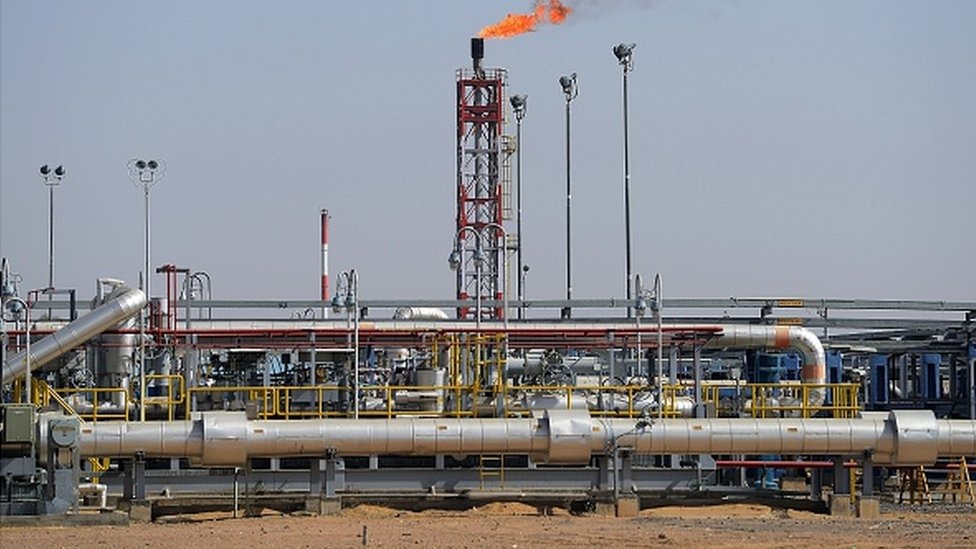
On 10 February, Alioune Gueye, the CEO of Senegal’s state-owned oil company Petrosen, said that the firm plans to launch a USD 100m onshore oil exploration project later this year.
- The planned project reflects Senegal’s growing efforts to boost the state’s control over the development of the oil and gas sector, in line with President Bassirou Diomaye Faye’s development agenda.
- However, amid capital constraints, Senegal will need to attract foreign investors and financial partners, especially as the government scrambles to mitigate a debt crisis.
- This will avert widespread contract cancellations and discourage mass nationalisation in the oil and gas sector.
- These dynamics will also delay state-led oil and gas development initiatives, including the planned Petrosen onshore exploration.
- Operators in the oil and gas sector will face mounting tax risks in the coming year, as the government resorts to aggressive tax collection strategies to counter budget shortfalls.
Increasing capacity
Gueye is hopeful that the exploration exercise will lead to major finds that could boost Senegal’s fuel production capacity and strengthen its role in the global energy market. Senegal currently produces crude oil at the Sangomar deepwater project and Liquefied Natural Gas (LNG) at the Greater Tortue Ahmeyim (GTA) project. The two offshore projects began production in 2024 and 2025, respectively, and are expected to collectively contribute at least 0.7% to GDP in annual revenues. Senegal is grappling with serious financial woes, including a debt-to-GDP ratio of 132%. The country has made efforts to expedite the development of the oil and gas sector. In September 2025, the Ministry of Energy and Petroleum revoked an exploration licence owned by Atlas Oranto Petroleum, a Nigerian-owned firm. The ministry accused the firm of carrying out minimal exploration work since the licence was granted in 2008.
Separately, Energy Minister Birame Souleye Diop announced on 9 December that Senegal plans to nationalise the Yakaar-Teranga natural gas project. The project aims to produce natural gas by 2027, but has faced delays amid disputes between the authorities and investors. In 2023, British oil giant BP left the project due to a disagreement over its plans to export the natural gas from the project, which conflicted with Senegal’s plan to use the project to boost domestic electricity supply. Reiterating these plans, Diop said that while the possibility of export has not been ruled out, the government is keen to develop the project for domestic consumption. US-based firm Kosmos Energy, which operates the project and owns 90% of it, said that its licence expires in July 2026.
Development agenda
Senegal’s aggressive pursuit of a stronger oil and gas sector broadly aligns with the development agenda of President Faye. The agenda, dubbed the Economic and Social Recovery Plan (Jubbanti Koom), seeks to spur economic growth and financial autonomy, while simultaneously reducing spending and debt. The plans to nationalise the Yakaar-Teranga project and invest in onshore exploration are intended to boost the state’s control over its natural resources. These deliberate attempts by the government to implement the Jubbanti Koom plan reflect the growing maturity of public finance institutions, as well as genuine political will to espouse a comprehensive economic policy.
This attitude is likely to boost policy continuity and stability, even as the growing rivalry between Faye and his Prime Minister, Ousmane Sonko, drives periodic policy disputes. Both men are committed to the Jubbanti Koom plan. This will make it easier for public finance officials to develop comprehensive responses to Senegal’s most pressing financial woes, including the need to expedite revenue mobilisation from oil and gas operations and adopt sound debt sustainability policies.
Capital will remain a challenge
However, practical considerations will undermine the implementation of these policies. First, financing state-led investments will be difficult, as debt servicing, which constitutes about 70% of this year’s budget, strains state coffers. This is especially true given that both Sonko and Faye, who ran on a populist campaign, will be reluctant to cut social spending, as they fear unrest. Likewise, reducing the wage bill would threaten their political alliances. In this context, fiscal consolidation will remain elusive, at least in the next few years, making it hard for the authorities to fund development projects. The authorities will have to choose between prolonging the timeline for these projects and finding financial partners, which may undermine perceptions of autonomy.
Given the country’s already elevated debt burden and the resulting sovereign credit rating downgrades, obtaining debt capital will remain difficult, and most investors will push for equity in these projects. Senegal will, in many cases, concede to the latter, but with strict control requirements, complicating negotiations.
Contract and regulatory risks
Meanwhile, the need to boost investor sentiment will limit how much pressure the authorities can exert on operators to accelerate exploration and production. Although further licence revocations and contract reviews targeting “slow” operators in the oil and gas sector are likely in the coming year, these are unlikely to be widespread. Businesses deemed strategic by the government are likely to be able to negotiate their way out of coercive practices.
All in all, these dynamics mean that the benefits of the planned projects are unlikely to be felt in the short to medium term. The planned Petrosun exploration is likely to suffer from capacity constraints, undermining both the quality of its findings and the desire of the authorities to expedite the process. Moreover, the authorities will remain open to negotiations with Kosmos Energy, using the threat of nationalisation to push for a significant part of the output to be reserved for domestic consumption. However, without financial partners to prop up the nationalisation, the balance of power will remain in favour of the firm. In any case, these considerations will further delay the start of production at the Yakaar-Teranga project.
In the meantime, Senegal will seek to maximise revenue inflows from existing oil and gas operations, as well as from other lucrative sectors such as real estate. This will expose firms in these sectors to intense tax compliance scrutiny, but in our view, the desire of the government to preserve investor confidence will boost the ability of most firms to navigate this.
These dynamics also increase the likelihood of a debt restructuring in the coming year, despite Sonko’s strong rhetoric against this. The restructuring would expedite Senegal’s access to much-needed multilateral lending.
Sources
Senegal launches $100 million onshore oil and gas plan after revoking licenses from Inactive operators, Business Insider Africa
Senegal plans to nationalise Kosmos-run Yakaar-Teranga gas project, Reuters
For tailored analysis on the oil and gas sector in Senegal, please contact Africa Investigates Incorporated.
Email: africainvestigates2020@gmail.com
Tel: +221785282247