
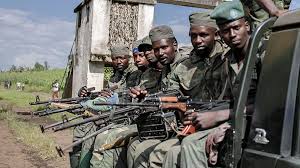
On 2 March, the US sanctioned the Rwandan Defence Force (RDF) and four of its senior officials for providing support to the March 23 (M23) rebel group in Democratic Republic of Congo (DRC).
- As underlined by the economic sanctions on the RDF, the US has adopted a tougher stance towards Rwandan military interference in the DRC, especially as it threatens prospective US investments in the Congolese mining sector.
- In our view, the balance of power is still in Rwanda’s favour due to its strategic importance to French interests in Mozambique, but the DRC’s increased bargaining power will threaten this in the coming year.
- To shield its army from major operational and logistical constraints, Rwanda will rely on the support of France to obtain exemptions for transactions linked to its participation in peacekeeping operations.
- Rwanda is also likely to offer some symbolic concessions regarding the M23 crisis, for instance, by temporarily reducing its presence in the DRC.
- However, Rwanda will remain reluctant to sever its links to the M23, leading to further accusations of human rights abuses and violations of the US-brokered peace deal it signed with DRC (the Washington Accords).
- In this context, US sanctions on Rwandan state-affiliated companies cannot be ruled out in the coming months. In any case, as the RDF is embedded in the ruling Rwandan Patriotic Front (RPF) patronage system, the sanctions will cause serious financial strains for President Paul Kagame and his allies.
Asset freezes and transaction bans
The US Department of the Treasury’s Office of Foreign Assets Control (OFAC) accused the RDF of facilitating human rights abuses committed by the M23 in eastern DRC through direct operational support. According to OFAC, this support includes training, troop contributions, and the provision of advanced military equipment such as GPS jamming systems and drones. OFAC also claims that the RDF supports M23 recruitment activities in refugee camps. According to OFAC, these acts have enabled Rwanda to gain access to mineral-rich areas in eastern DRC.
The sanctioned RDF officials are RDF Chief of Staff Vincent Nyakarundi, Ruki Karusisi, the commander of the RDF’s 5th Infantry Division, RDF Chief of Defence Staff Stass Mubarakh Muganga, and Stanislas Gashugi, the Commander of the RDF’s Special Operations Force. The US accuses the four men of overseeing and coordinating the RDF’s support for the M23.
Pursuant to the sanctions, US persons are prohibited from transacting with firms that are at least 50% owned by the RDF (or the sanctioned individuals). Their assets are also frozen.
On 2 March, the Rwandan government said that the US sanctions are “unjust” and “one-sided.” Rwanda added that it is committed to the “disengagement” of its troops from eastern DRC as long as the DRC fulfils its obligations under the Washington Accords.
Diplomatic blow to Rwanda
The imposition of economic sanctions on the RDF is a major setback for Rwanda and underlines its reduced bargaining power in the international community vis-à-vis the DRC. Although the strong link between the RDF and the M23 was established years ago, the US had been reluctant to target Rwandan state institutions with sanctions and had only sanctioned a handful of Rwandan officials. This stance was primarily driven by the desire of the US to preserve existing dynamics with Rwanda, with which it had a stronger history of security collaboration. Emboldened by this and by the incapacity of the DRC to recapture North and South Kivu from the M23, Rwanda, on 22 January, for the first time publicly acknowledged its support for the M23. This admission was intended to pave the way for Rwanda to officially push for the creation of a buffer zone in eastern DRC, but as we anticipated, this plan has backfired. Rwanda has underestimated the importance of the Washington Accords to the US, both as a PR stunt for US President Donald Trump and as an avenue for the implementation of the US’s critical mineral ambitions.
By undermining the deal, for example, by supporting an M23 incursion into Uvira town (South Kivu, DRC) just days after the signing of the deal, Rwanda exposed Trump to public embarrassment. This could jeopardise Rwanda’s plans to position itself as a gateway to eastern DRC. This is especially true given that in the meantime, the DRC government, which has forged strong relations with pro-Trump US politicians, has expedited US investments in its mining sector. For example, on 3 February, Swiss mining giant Glencore announced that it is negotiating the sale of a 40% stake in its copper and cobalt projects in the DRC’s Katanga region to a US-led consortium. To protect these prospective projects, the US is likely to strengthen its response to violations of the Washington Accords. This is likely to undermine Rwanda’s position, as underlined by the fact that the intensive lobbying by Kagame in recent weeks did not prevent the sanctions.
The sanctions, and especially the accusations of complicity in human rights abuses, will legitimise the DRC’s long-running accusations of aggression against Rwanda. This is likely to further taint Rwanda’s international image, as more international partners face pressure to distance themselves from the RPF regime.
Operational and financial impacts
The sanctions could also have serious financial implications for Rwanda in the medium to long term. The RDF is deeply embedded in the RPF’s patronage system and owns many of the party’s affiliated holding companies. The OFAC sanctions will exclude these firms from the international financial system, restricting capital movements. This will also constrain the RDF’s financial transactions, resulting in operational issues. However, this is unlikely to significantly undermine the RDF’s military capacity in the short term, given that Rwanda has a wide range of security partners. Rwanda is an important military partner for US allies such as France and has been instrumental in repelling Islamists from northern Mozambique, where the French oil giant Total has major projects. We expect France to continue providing military assistance to the RDF, even if this will be subject to logistical issues.
Ordinarily, the OFAC restrictions would make it difficult for the UN to compensate the RDF for its participation in UN peacekeeping operations, which is expected to generate USD 134 million in the 2025/2026 financial year. However, Rwanda will seek to exploit US laws that exempt “UN business” from OFAC restrictions to prevent disruption to remittances from the UN. Whether the US will be amenable to a liberal interpretation of what constitutes UN business will depend on how Rwanda responds to the sanctions in the coming weeks. A major reduction in its military support to the M23, evidenced by a lull in M23 aerial attacks, would encourage the US to acquiesce to an exemption of UN remittances to the RDF, especially for the RDF’s contribution of troops to the Central African Republic.
In the same vein, further M23 advances outside the DRC’s North and South Kivu Provinces would encourage strict enforcement of the OFAC sanctions. This scenario would expose Rwanda’s security apparatus to major operational restrictions and funding/technical constraints. In particular, because the latest sanctions accuse Rwanda of complicity in human rights abuses by the M23, the RDF could be precluded from receiving US military assistance and training under the US Leahy Law.
Rwanda, whose stability depends on the continued strength of the RDF, will be keen to avoid this. Moreover, the UN will face mounting pressure from rights groups to reconsider its peacekeeping partnership with Rwanda, especially as reports of serious human rights abuses in M23-controlled areas intensify. In the long term, this could threaten the flow of foreign exchange for the RDF and, more broadly, reduce Rwanda’s diplomatic leverage.
Rwanda’s hardline stance
In light of these considerations, we expect the RDF to offer some concessions to the US, especially amid fears of sanctions targeting RPF-affiliated holding companies. The RDF is likely to reduce its presence in eastern DRC, at least temporarily. Nonetheless, this will mostly be symbolic and is unlikely to boost the prospects of a resolution of the conflict. Rwanda will remain reluctant to sever its links to the M23, using genuine concerns over the presence of ex-genocidaire groups in DRC to justify and maintain its economic and political influence in eastern DRC. This will sustain tensions with the DRC, which fears annexation of North and South Kivu by Rwanda. A lull in active fighting between the M23 and the FARDC is likely in the next few weeks, but the M23 will retain control of most of North and South Kivu, leading to more armed confrontations thereafter. However, the likelihood of the M23 withdrawing from these areas will increase if the US imposes more economic sanctions on RPF-owned entities in the coming months.
In the meantime, businesses with perceived links to the Rwandan government will face serious reputational issues, especially as Congolese activists intensify calls for boycotts. The security situation in eastern DRC will also remain volatile, exposing operators to serious operational and security threats.
Sources
Treasury Sanctions Rwanda Officials, Condemns Blatant Violations of Washington Peace Accords, US Department of the Treasury
Rwanda regrets one-sided sanctions, Office of the Government Spokesperson
For tailored analysis on the political, security, and socio-economic impacts of the M23 crisis in Rwanda, please contact Africa Investigates Incorporated.
Email: africainvestigates2020@gmail.com
Tel: +221785282247