
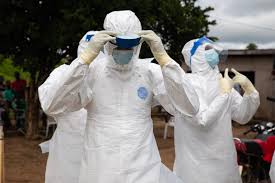
 On 17 May, the WHO announced that a recent outbreak of Ebola disease in DRC and Uganda constitutes a public health emergency of international concern, although it does not meet the criteria for a pandemic.
- The ongoing outbreak, which is concentrated in the DRC’s Ituri province, is driven by the Bundibugyo strain of the virus, for which there is no approved vaccine.
- Despite this, we do not expect the response to include widespread travel bans, lockdowns, or prolonged border closures. As the virus is not airborne, health officials will prioritise community sensitisation efforts and hygiene measures.
- Given the DRC’s porous borders, its closest neighbours, notably Uganda and Rwanda, will be the most vulnerable to a spillover. However, they both have the capacity to enforce and enhance health surveillance and hygiene measures.
- In the DRC, communal resistance and insecurity in Ituri risk complicating the response to the outbreak, potentially hampering the effectiveness of health measures.
- Humanitarian and healthcare workers will be exposed to armed attacks in remote areas in Ituri and North Kivu.
Hundreds of suspected cases
Local health officials in Ituri alerted the WHO regarding a suspected Ebola outbreak on 5 May. The first case was confirmed on 15 May, following tests. The test also confirmed that the outbreak was caused by the Bundibugyo strain of the virus, which has no approved vaccine or virus-specific treatment. Since then, over 500 suspected cases have been reported in DRC, especially in Ituri province, which borders Uganda and South Sudan. Of these, 33 have been confirmed thus far. 131 suspected deaths have also been reported in DRC. This includes two cases in neighbouring North Kivu province (Bunia and Goma)
In addition, Uganda confirmed its first two cases of Ebola on 15 and 16 May. Both have been attributed to the Bundibugyo virus. Following this, President Yoweri Museveni on 18 May postponed Martyrs’ Day, a Catholic religious festival, held on 3 June. Media reports also indicate that several border crossings between the DRC and Rwanda were closed on 17 May. Moreover, on 18 May, the US suspended any foreign nationals who have visited DRC, Uganda or South Sudan in the last 21 days from entering its territory.
According to Dr Jean-Jacques Muyembe, who heads DRC’s National Biomedical Research Institute (INRB), the virus was detected six weeks after the first symptoms were recorded. He attributed this delay to the worsening insecurity in Ituri, as well as testing limitations in rural areas. He nonetheless expressed confidence in the DRC’s Ebola response team, saying that they were able to contain 15 out of the 17 recorded Ebola outbreaks in the country without the use of vaccines.
Cautiously optimistic outlook
The Ebola outbreak is unlikely to significantly disrupt supply chains or result in widespread travel or activity restrictions. The DRC’s neighbours and partners will remain cautious, given the relatively high mortality rate of the Bundibugyo strain (about 30%) and the lack of an approved vaccine. However, as the disease is not airborne and mostly spreads through prolonged contact with body fluids, most partners will focus on enhancing health and hygiene measures in epicentres, as well as cross-border screening. These measures played a huge role in containing previous outbreaks, and local health officials in the DRC now have significant experience managing Ebola outbreaks.
However, decades of ethnic conflicts and rebellions, coupled with the limited reach of state structures in Ituri, have weakened social cohesion in the most affected areas. This is likely to complicate community cooperation and expose health officials to deep mistrust. Without the backing of local communities, it will be difficult for health officials to enforce contact-tracing measures. More importantly, resistance from local communities could complicate the efforts of the local authorities to prevent widespread contamination during burial ceremonies. Attacks against health officials are therefore likely. These could expose humanitarian workers to serious threats, given the easy availability of weapons in Ituri.
Security and political concerns
Local health officials are also likely to grapple with practical and coordinated security challenges. Many parts of Ituri are remote and not easily accessible by road. The Allied Democratic Force (ADF), a Ugandan group-turned-Islamist group, conducts regular attacks in Ituri, including in Irumu. Meanwhile, North Kivu has been under the occupation of the March 23 rebel group (M23) since January 2025. The M23 runs a dysfunctional administration that has disrupted existing health mechanisms, particularly because the province is cut off from the rest of the country. This will hamper the coordination of the Ebola response between the Ministry of Health and local health officials in Goma.
The M23 will face mounting pressure to reopen the airport of Goma in the coming weeks to ease the supply of medical provisions, including personal protective equipment (PPE). A partial reopening of the airport is increasingly likely, but this will be subject to regular disruptions. Even once the airport is open to humanitarian operators, the Ministry of Health is likely to focus on containing the virus in Ituri, leaving the response in North and South Kivu almost entirely to the discretion of the M23. These dynamics are likely to prolong the containment of the virus in Eastern DRC.
Cross-border movement
Countries that border this region, notably Rwanda, Uganda, and South Sudan, will be the most vulnerable to a spillover. They also share porous long borders with Eastern DRC and important trade relations with this region. Prolonged border closures are thus not practical, and the three countries will instead focus on cross-border screening, as in previous outbreaks. However, with the exception of South Sudan, these neighbours have a relatively strong control over their territory and less fragmented socio-political dynamics. This will ease the implementation of burial, health, and hygiene mandates, boosting their efforts to prevent the spread of the virus to the wider East African region.
All in all, the Ebola outbreak could result in increased administrative processes and costs for cross-border traders in the coming months, but border closures will be temporary, preventing major supply chain disruptions.
Sources
“Ebola deaths in eastern Congo rise to 131 as outbreak spreads” Reuters
For tailored analysis on the impact of the Ebola outbreak on the operating environment, please contact Africa Investigates Incorporated.
Email: africainvestigates2020@gmail.com
Tel: +221785282247