
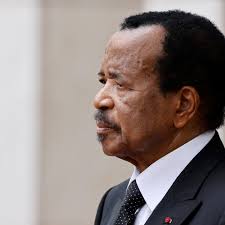
On 4 April, Cameroon’s parliament passed a bill that introduces the post of Vice President as an automatic successor to the president in the event of a death or incapacitation in office.
- The move is intended to preserve the status quo, even as rival factions of the ruling Cameroonian Peopleʼs Democratic Movement (RDPC) compete to succeed 93-year-old President Paul Biya.
- Appointing Biya’s powerful secretary general, Ferdinand Ngoh Ngoh, as Vice President would be a risky move for Biya’s inner circle, which sees Ngoh Ngoh’s influence and presidential ambitions as a threat.
- Biya’s son, Franck Biya, and his Minister of Finance, Louis-Paul Motazé, are more likely to be appointed to the post, which the former is keen to use to gradually build a support base.
- In any case, these dynamics will further worsen power-wranggles between different ethno-regional factions of the RDPC, leading to political violence in the coming year.
- These dynamics are also likely to further worsen anti-government sentiments among local youths, emboldening secessionist groups in the North-West and South-West regions in the coming years.
Continuity
The new position was introduced as part of a constitutional amendment that is aimed at fostering continuity. Biya, whose advanced age and frail appearance are increasingly contentious in public discourse, is expected to sign the bill into law within the next 15 days. According to existing laws, in the event of the death or resignation of the president, the president of the Senate would temporarily take over and organise presidential elections. However, the bill removes the requirement for an election, stating that the Vice President would serve the remainder of the president’s term. Opposition leaders are concerned that this would further centralise power in the RDPC, which has been in power since the country’s independence in 1960.
Main opposition leader Maurice Kamto said on 4 April that he would launch a campaign to challenge the amendment, which he deems a “constitutional coup”. His Movement for Cameroon Renewal (MRC) party is not represented in parliament and therefore did not participate in the vote. The Social Democratic Front (SDF), another opposition party, boycotted the vote. SDF chairman Joshua Osih said that the Vice President should be jointly elected with the president, and that the position should be reserved for an Anglophone figure. Under the bill, Biya has the power to appoint or dismiss the Vice President. Nonetheless, in a feeble attempt to boost oversight, the Bill states that a Vice President who succeeds the president cannot run in subsequent elections or initiate a constitutional amendment.
Unwieldy arrangement
The constitutional amendment is a poor attempt by the RDPC to address the rising competition among its members over Biya’s succession. By removing the need for an election in the event of Biya’s death in office, the RDPC is hoping to foster continuity, especially by preventing the opposition from using any impasse to challenge the party’s legitimacy. However, the structure of the new position reveals a continued lack of consensus regarding the management of a post-Biya transition, as well as deep mistrust between rival RDPC factions. First, by limiting the powers of the prospective prime minister, including his eligibility for the elections, the RDPC is hoping to prevent rival factions from bypassing the party’s structures to consolidate power. This is intended to enable Biya’s inner circle to retain the most control, while simultaneously suppressing powerful factions. In this context, and given the weakness of Cameroon’s constitutional institutions, the ideal candidate for the post lacks enough power to bypass the legal limitations envisaged by the bill, although he enjoys the general trust of Biya’s inner circle.
For this reason, Ngoh Ngoh is highly unlikely to be appointed to the post. He has a strong network of allies, including First Lady Chantal Biya, and strong control over the party’s patronage network. This would enable him to introduce further constitutional amendments to expand the powers of the Vice President and extend his mandate. This would threaten the interests of ethnic-Beti factions of the party, who are keen to replace Biya with a fellow Beti figure such as Motazé. At the same time, however, Biya’s son and preferred successor, Franck Biya, will see the position as an opportunity to gradually consolidate power and build legitimacy in anticipation of a face-off with Ngoh Ngoh. In our view, Franck Biya and Motazé are the most viable candidates for the Vice President position. The balance of power is in favour of the former, but if appointed, he will face major repression from the Ngoh Ngoh faction. A decision to appoint Motazé as Vice President – intended to preserve the status quo – would be followed by increasingly open confrontations between Ngoh Ngoh and Franck Biya, as each man seeks to position themselves to take power. The likelihood of a coup d’état shortly after Biya leaves power would also increase in this scenario, especially given Ngoh Ngoh’s strong influence over the army.
Confrontation is inevitable
Either way, these dynamics are likely to further hamper political stability prospects in the coming year. The RDPC will grapple with mounting fragmentations, which are increasingly likely to trigger targeted assassinations and unrest in the coming year.
Meanwhile, weakened by years of violent repression and disunity, the opposition has limited legal avenues through which to challenge the bill. This is especially true given that the RDPC has strong control of the judiciary. This is likely to encourage some opposition leaders and sections of the disillusioned youth to turn to secessionist groups in the North-West and South-West regions. Although the operations of these groups will remain constrained by military pressure, we expect a gradual increase in low-level attacks in the North-West and South-West regions. Opposition and youth-led protests are also likely to increase in intensity and frequency, but they will remain localised in the coming year.
In light of these dynamics, operators need to prepare for an increasingly volatile security and political situation. Scenario-based contingency planning will be increasingly important to facilitate post-Biya business continuity goals and mitigate the threat of contract cancellation and harassment.
Sources
Cameroon approves role of vice president to 93-year-old Biya, Reuters
World’s oldest leader to get a deputy for first time in 43-year rule, BBC
For tailored analysis on the prospects of political stability in Cameroon, please contact Africa Investigates Incorporated.
Email: africainvestigates2020@gmail.com
Tel: +221785282247