
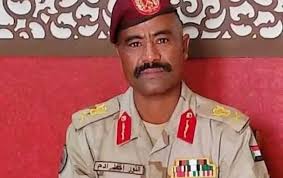
On 18 April, Abdel Fattah al-Burhan, the leader of the Sudan Armed Forces (SAF), met with Maj. Gen. Al-Nour Ahmed Adam (also known as Al-Nour Guba), who recently defected from the Rapid Support Forces (RSF) paramilitary group.
- Fighting between the RSF and the SAF, which escalated into a civil war in April 2023, has intensified in the last month, especially in South Kordofan State.
- Both camps are grappling with funding uncertainties, as their respective external supporters navigate the conflict in Iran.
- This will limit the extent to which the SAF can benefit from Guba’s defection, even though leadership rows will increasingly complicate dynamics in the RSF.
- In our view, the country will remain fragmented over the coming months, with the SAF controlling north and eastern regions, and the RSF entrenching its power in Darfur.
- Over the next few months, fighting is likely to be concentrated in North Darfur, South Kordofan, and to a lesser extent, Gezira States, worsening the already volatile operating and humanitarian environment.
Influential general
Guba was a senior figure in the RSF military leadership, and sections of the local media claim that he played a major role in the capture of El-Fasher (North Darfur State) on 26 October 2025. He reportedly fled the North Darfur town of Kutum on 9 April to evade arrest by RSF officials. According to the local media, this came amid a dispute over the leadership of North Darfur. Burhan welcomed Guba’s defection, saying that all Sudanese who wish to participate in the reconstruction of the country are welcome to join the SAF.
On the same day, the SAF announced that it had launched a ground offensive in RSF-controlled areas in North and South Kordofan States (Kazgeil, Shwaya, Al-Hammadi, and Al-Dubeibat). Fighting between the two camps has intensified in the two states, killing at least 100 people since February. Moreover, the RSF claimed that a drone strike hit a medical facility in El Geneina (West Darfur State), killing three people.
Despite multiple international mediation attempts, the humanitarian and security crisis resulting from the conflict has continued to deepen, especially because the country is now fragmented. The SAF, which is widely seen as the de facto authority, controls the Northern and Eastern parts of the country, including the capital, Khartoum, and Port Sudan (the country’s main logistics hub). Most of the Darfur region and its surroundings are under the control of the RSF.
Precarious time for both camps
Guba’s defection is more than just a symbolic setback for the RSF. It comes at a time when the group is grappling with uncertainties regarding the future of its collaboration with the UAE, its main backer. Faced with the fallout from the conflict between Iran and the US/Israel, the UAE is likely to prioritise domestic issues, especially as it grapples with disruptions to the oil supply chain and tourist inflows. This does not necessarily mean that the UAE will immediately draw back on its support for the RSF.
Indeed, the liquidity pressures resulting from the Iran conflict could increase the demand for Sudanese gold in the UAE. Whether this boosts or sustains the bargaining power of the RSF, which controls most gold mines in the country, will depend on the group’s ability to retain control of gold-rich areas and make its export chains more efficient. The latter will be difficult given that the RSF has no direct port control and relies on illicit smuggling networks through neighbouring countries such as Chad. This network relies on complex and rapidly shifting alliances with communal elders and kingpins. Guba’s defection and the leadership row surrounding it could, therefore, undermine cohesion in the RSF political economy system, which is already plagued by ideological and tribal divisions.
The RSF will seek to maximise its territorial control over the coming months, both as a signal of continuity to the UAE and as part of its efforts to diversify funding. However, in light of these dynamics, the RSF will struggle to capture strategic areas, including agricultural lands in Gezira.
Nonetheless, the SAF is unlikely to successfully exploit these setbacks because, like the RSF, it relies on the external backing of countries such as Saudi Arabia that are also likely to prioritise domestic issues amid the Iran conflict. The SAF is therefore unlikely to dislodge the RSF from strongholds, especially in Darfur. The defection of Guba could enhance the SAF’s intelligence and surveillance mechanisms, potentially precipitating the recapture of El-Fasher. However, even in this scenario, the RSF will most likely retain control of most of Darfur, leaving El-Fasher vulnerable to another RSF occupation.
International disengagement
As the international community becomes disengaged from the conflict, both camps will face less diplomatic pressure to engage in dialogue. This will also reduce the incentive for both camps to foster accountability and respect humanitarian norms, leading to even more human rights violations. These risks prolonging the protracted nature of the conflict and gradually legitimising the fragmentation of the country. While the Jeddah talks remain stalled, the trend is toward de-prioritization of Sudan by Western and Gulf powers.
For businesses and humanitarian organisations, the coming months are likely to be even more difficult to navigate. Another round of intense armed confrontations over El-Fasher is likely, leading to massive displacements and widespread violence against civilians. Humanitarian responses will be increasingly constrained by logistical and security challenges, especially as ambushes targeting personnel and cargo envoys intensify. The exposure of operators to harassment and coercion will also increase in Gezira, Darfur, and South Kordofan. We maintain that large-scale attacks are unlikely in Port Sudan, but one-off skirmishes cannot be ruled out. We advise humanitarian operators to retain the highest standards for travel to Darfur and South Kordofan, even during temporary lulls in fighting.
Sources
Sudan war: Senior RSF commander defects to army in major blow to paramilitaries, Africa News
Rising civilian toll in South Kordofan as fighting intensifies, drone strike kills three at West Darfur hospital, Dabanga Sudan.
Sudan army launches major ground offensive in North and South Kordofan, Sudan Tribune,
For tailored analysis on conflict risks in Sudan, please contact Africa Investigates Incorporated.
Email: africainvestigates2020@gmail.com
Tel: +221785282247