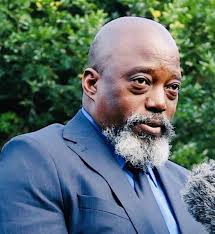
 On 30 April, the US sanctioned the DRC’s former President, Joseph Kabila (2001–2019), accusing him of funding the Rwanda-backed March 23 (M23) rebel group.
- The sanctions will boost President Felix Tshisekedi’s bargaining power, as he steps up efforts to co-opt sections of the M23 through a mix of intimidation and negotiation.
- This is likely to further weaken the M23’s structures, which are already fragmented along ethnic, clan, and ideological lines.
- However, whether this forces the M23 to withdraw from key areas in North and South Kivu Provinces will depend on the extent to which Tshisekedi can secure additional economic sanctions on Rwanda.
- Without these sanctions, Kabila would be able to support the gradual expansion of the M23’s operations southward into the mining Katanga region, potentially deepening the security crisis.
- In our view, the former scenario is more likely given the DRC’s growing importance in the US’s critical mineral agenda, but progress will be slow.
- Operators should prepare for another face-off between the Congolese army (FARDC) and the M23 for control of Goma (North Kivu) towards the end of 2026.
Material and political support
According to the US Treasury, Kabila has provided the M23 and its political arm, the Congo River Alliance (AFC), with financial and political support, thereby contributing to the violence and destabilisation in eastern DRC. The US also claims that Kabila encouraged FARDC soldiers to defect to the AFC. As a result, the US has blocked all of Kabila’s assets in the US, as well as any assets in which he has a 50% or more direct or indirect stake. This also means that US citizens and residents (including companies) are prohibited from transacting with any such assets.
On 1 May, Kabila denied the accusations and promised to take legal action to challenge the sanctions. On 30 September, a High Military Court convicted Kabila of war crimes, treason, and collusion with the M23 and sentenced him to death. Moreover, the leader of the AFC, Corneille Nangaa, is a close ally of Kabila. Kabila went into self-exile in South Africa in 2023, but visited Goma (North Kivu) in April 2025, shortly after the city was captured by the M23. The US now says that during the visit, Kabila enjoyed the protection of the M23.
Win for Tshisekedi
The decision of the US to impose sanctions on Kabila is a major win for Tshisekedi, whose government is keen to isolate the main M23 wing from the AFC. Despite his bravado, it will be difficult for Kabila to bypass the sanctions, especially as they are tied to beneficial ownership. The sanctions also represent a symbolic setback for Kabila, who had been trying to improve his public image after leaving office, with the aim of positioning himself as an African statesman.
Tshisekedi is likely to take advantage of this to step up his intimidation tactics against Kabila and his allies, in hopes of pushing Nangaa into negotiations separate from the ongoing Qatar-led mediation between the government and the M23. Without the support of the AFC, which had facilitated the co-option of militia leaders from a wide range of communities, the M23 risks being relegated back to an ethnic-Tutsi militia, potentially undermining the legitimacy of its occupation. To this end, Tshisekedi and his allies will intensify legal action against members of Kabila’s People’s Party for Reconstruction and Democracy party (PPRD), using the sanctions as legal and moral justification for more asset seizures and arrests.
The Katanga factor
Such acts are also increasingly likely to target allies of Kabila in the Katanga region, where sentiments against the Tshisekedi regime are especially negative. On 3 March, a new rebel group dubbed the Stand-Up Katanga Movement for the Liberation of Congo (MDKC) claimed responsibility for an armed attack in Mitwaba (Haut-Katanga Province). This came against a backdrop of elevated perceptions of marginalisation in Katanga following the 2023 elections, during which Katangan opposition leaders faced heavy repression.
Tshisekedi’s increased influence over artisanal operations in Katanga has worsened these perceptions, as underlined by the uptick in attacks by ethnic militias in the region since the last elections. Tshisekedi is worried that allies of Kabila in Katanga could capitalise on these dynamics to support groups such as MDKC and Bakata Katanga, a secessionist group. He will therefore be keen to restrict the activities of allies of Kabila in this region in the coming months.
Scenarios
Whether this strategy succeeds depends on the extent to which the US remains engaged in the resolution of the M23 crisis. The M23’s territorial advances have slowed since the US imposed economic sanctions on the Rwandan Defence Force (RDF) on 2 March. However, continued security cooperation with the EU and France mitigated a funding crisis in the Rwandan security sector.
Additional sanctions on strategic assets of the ruling Rwandan Patriotic Front (RPF), such as Crystal Ventures, would significantly strain public finances in Rwanda, threatening the M23’s main source of funding. This would trigger major defections from the M23, especially as factions linked to Nangaa openly negotiate with the government.
However, in the alternative scenario, where Tshisekedi struggles to obtain any more serious US sanctions on Rwanda, Kabila, who has a strong influence over a wide range of armed groups in the east and in Katanga, would strongly retaliate against the sanctions. This would potentially precipitate the advance of the M23 towards Tanganyika Province, and gradually the rest of Katanga. In the meantime, both camps will engage in heavy lobbying to push their position in the US, leading to a stalemate.
Nonetheless, in our view, Kabila will have little choice but to eventually negotiate with Tshisekedi in the coming year to obtain a lifting of the sanctions. Given the strong desire of the US to take over the Congolese critical mineral supply chain, the balance of power is in Tshisekedi’s favour. An M23 attack in the Katanga region, where some US firms have recently acquired mining projects, would most likely elicit a strong reaction from the US, including further economic sanctions on Rwanda.
Escalation likely in late 2026
These dynamics will further undermine cohesion in the M23, which is likely to experience mounting fragmentation in the coming months. The group is likely to retain control of most of North and South Kivu provinces in the next few months, but the likelihood of a withdrawal from Goma and Bukavu will increase from late 2026.
In any case, the security situation in both provinces will become even more volatile, both due to infighting and clashes with the FARDC. Criminal activity is also likely to worsen in these areas, further complicating the operating environment.
We advise operators to prepare for another face-off between the M23 and the FARDC around Goma/Bukavu. Parts of Katanga, especially Manono, Mitwaba, and Pweto (Haut Katanga province), are also likely to experience a spike in low-level militia attacks and communal violence. This will remain localised, at least in the coming weeks, posing limited threats to large commercial mining companies.
Sources
Treasury Sanctions Former Democratic Republic of the Congo President for Ties to Armed Conflict, US Department of the Treasury
DR Congo’s former President Joseph Kabila denounces ‘unjustified’ US sanctions, Anadolu Agency
For tailored analysis on the M23 crisis, please contact Africa Investigates Incorporated.
Email: africainvestigates2020@gmail.com
Tel: +221785282247