
On 9 April, Andre Wameso, the Governor of the Congo (DRC)’s Central Bank (BCC), announced that the BCC had received its first batch of refined gold from the country’s first gold refinery.
- This is part of the BCC’s first structured gold purchasing initiative, which is supposed to rely on the recently launched gold refinery in Tanganyika Province.
- The Congolese government will attempt to curb gold smuggling over the coming years through a mix of traceability mechanisms, development projects, and administrative reforms.
- If accompanied by sustained institutional and political reforms, these efforts could gradually increase the state’s influence over the gold supply chain and contribute to foreign reserve accumulation and currency stability.
- However, in our view, political considerations will discourage any such reforms in the next few years, sustaining widespread corruption and political interference in the refinery project and the BCC’s gold reserve ambitions.
- In addition, the DRC’s strained relations with neighbours such as Rwanda and Uganda, as well as Kenya, which are transit hubs for smuggled Congolese gold, will complicate traceability coordination.
- Consequently, the Congolese gold supply chain will remain vulnerable to conflict contamination, exposing commercial operators to compliance and integrity risks in the coming years.
Gold sector reforms
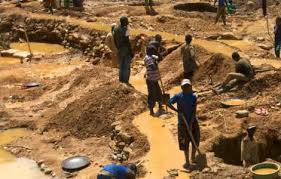
On 19 February, the BCC signed an agreement to purchase refined gold ingots from DRC Gold Trading SA, a state-owned company. The BCC plans to convert the gold into monetary reserves, in line with ongoing macro-economic reforms aimed at boosting monetary and fiscal stability in the DRC. The gold is sourced from artisanal miners, who dominate the DRC’s gold sector, and refined by the country’s first gold refinery – DRC Gold Refinery S.A. DRC Gold Refinery is a joint venture between DRC Gold Trading SA and Lunga Mining, a private entity. The refinery inaugurated its first plant in Kalemie (Tanganyika Province) on 11 March. According to the authorities, the plant has a monthly processing capacity of 500–600 kilograms and will enable the BCC to access 99.9% pure gold, in line with international export standards.
DRC Gold Trading SA was created in 2022, previously known as Primera Gold, as a joint venture between the DRC government and a UAE-based firm. The authorities gave Primera Gold exclusive rights to purchase gold from artisanal miners, ostensibly to curb smuggling and centralise exports. The deal faced major resistance from civil society groups, especially because of low export volumes and perceptions that these exports did not generate enough revenue for the government. The government took full control of the firm in 2024.
Political interference
Without adequate institutional and political reforms, the current drive to formalise the gold sector and boost its contribution to economic development is likely to face serious challenges. First, the vulnerability of the BCC and mining regulators to political interference risks exposing the initiative to a wide range of vested interests that could override genuine policy priorities.
In particular, the desire of President Felix Tshisekedi and his allies to consolidate their influence over mining patronage networks is likely to inform the selection of private partners for the initiative. Firms are likely to be able to leverage their links to the president’s inner circle to bypass official tender/licensing processes regardless of their technical capability or internal governance systems. In addition to driving corruption, this is likely to hamper the implementation of traceability initiatives. State structures have a limited reach in large parts of the countries, which are controlled by an array of militias. These practices will therefore sustain conflict contamination across the gold supply chain. This is especially true given the widening conflict in North and South Kivu Provinces, where the Rwanda-backed March 23 rebel group has taken over several artisanal gold mining sites.
Furthermore, Tshisekedi and his allies will continue to leverage access to mining networks to suppress dissenters and limit the ability of his detractors to destabilise his government. Businesses with perceived links to opposition leaders and perceived threats, especially those affiliated to former President Joseph Kabila (2001–2019) and popular businessman Moïse Katumbi, will be increasingly targeted by licence revocations and hefty penalties. This is likely to derail gold development projects, particularly because firms linked to politicians tend to dominate the sector.
Similar considerations contributed to the collapse of previous plans to establish a refinery in the country. Notably, the decision of the authorities to revoke the licence of Congo Gold Raffinery (CGC), which had been created in 2021 and planned to launch operations in 2023, was at least partly motivated by the fact that the firm was owned by Karim Somji, who was seen as too close to Kabila at the time. Similar acts are likely in the event of a fall-out between Tshisekedi and his allies. As the president seeks to gain support for constitutional changes that would allow him to run for a third mandate, he will respond even more strongly to perceived threats.
Unfavourable geopolitical conditions
The rising regional polarisation in Eastern Africa will also present a major hurdle to the DRC’s bid to curb illicit gold exports. Tensions between Tshisekedi and Kenyan President William Ruto have derailed collaboration on the formalisation of gold trade between the two countries. Kenya is a major transit hub for smuggled Congolese gold, meaning the deterioration of the relations between the two countries will hamper coordination. Likewise, the DRC’s tense relations with Rwanda and Uganda, with which it shares long, porous borders, will complicate cross-border traceability, especially because Rwanda continues to face accusations of illicitly exporting gold from eastern DRC.
In this context, DRC Gold Refinery will have to compete with a huge black market. Security considerations will continue to limit the firm’s geographical reach, making it difficult to reduce the influence of middlemen. Without addressing these issues, the gold purchase scheme between DRC Gold Refinery and the BCC will mostly benefit a small group of business and political elites, limiting the scheme’s contribution to foreign reserves.
IMF pressures
In the long term, however, the recent reforms could boost the government’s influence over gold trading and slowly dismantle illicit networks. This will largely depend on whether the Congolese government remains committed to IMF-supported institutional reforms to strengthen the mining regulatory framework and boost overall transparency. The IMF has, in recent years, supported the BCC’s bid to boost foreign reserves, and will closely scrutinise the implementation of the gold purchase scheme.
The desire to retain access to multilateral lending is likely to encourage some efforts to adopt pricing and transparency mechanisms that align with international standards. This is also likely to encourage more administrative and tech initiatives to boost traceability, as underlined by the launch of the country’s first digital mineral certification platform (E-trace) in late 2025. However, political will to support these is likely to dwindle as the end of Tshisekedi’s mandate in January 2029 approaches. This means there is a short reform window that will be characterised by slow progress, after which the fate of the refinery and the gold purchasing scheme will depend on the outcome of the next elections.
Overall, these dynamics mean that the DRC’s gold sector will remain mostly informal and decentralised, with non-state actors (including armed groups) retaining a strong influence over the artisanal supply chain. This will continue to expose large commercial operators to serious integrity risks due to a high risk of contamination. Compliance costs for these firms are likely to increase due to the government’s traceability drive. Large operators will also continue to require major investments and stakeholder management to navigate the fragmented political space and informal regulatory framework.
Sources
First batch of gold ingots delivered to DRC central bank under new reserve programme, Business Insider Africa
Congo state gold trader targets volumes of 15 tons of artisanal bullion in 2026, Reuters
Feeding the furnace: tracing opaque gold supply chains and deals in Central Africa, Global Initiative Against Transnational Organized Crime
For tailored analysis on the DRC’s gold reform drive, please contact Africa Investigates Incorporated.
Email: africainvestigates2020@gmail.com
Tel: +221785282247