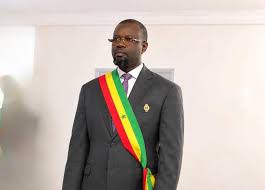
 On 26 May, Ousmane Sonko was elected as the President of the National Assembly, four days after being dismissed from his post as Prime Minister.
- President Bassirou Diomaye Faye will struggle to assert his authority over the coming year, as Sonko uses his new position to further consolidate power in the African Patriots of Senegal for Work, Ethics and Fraternity (PASTEF) party.
- This could force Faye to seek the backing of the old guard, including figures close to the former President Macky Sall (2012-2024), further undermining his appeal to the youth.
- Faye will also be vulnerable to an impeachment motion, especially if he attempts to dissolve parliament later this year.
- These dynamics will drive major policy delays and disputes, prolonging negotiations with the IMF for debt restructuring and increasing the threat of a sovereign default.
- The threat of violent unrest will also increase in the coming months, given Sonko’s popularity among young people, exposing businesses in urban areas to more regular periods of disruption.
Major leadership changes.
President Bassirou Diomaye Faye officially dismissed Sonko on 22 May without giving a reason. Faye also dissolved the government, dismissing all ministers and state secretaries. A few days later, on 24 May, El Malick Ndiaye, a close ally of Sonko, resigned as the President of the National Assembly, citing public responsibility and the national interest. Following this, the National Assembly held a special session to deliberate whether to reinstate Sonko as a Deputy (member of parliament).
Sonko won a seat in the National Assembly at the November 2024 elections, but the position was taken up by his substitute because he was already the Prime Minister at the time. Senegalese legal scholars are divided regarding whether his decision to forego the parliamentary post in November 2024 can be legally reversed. Despite this, Sonko assumed his parliamentary post. Shortly after this, 132 out of Senegal’s 165 Deputies voted for him as the new President of the National Assembly.
The ruling African Patriots of Senegal for Work, Ethics and Fraternity (PASTEF), which was co-founded by Sonko and Faye, is expected to hold its congress on 6 June. The party holds an absolute majority in the National Assembly (130 seats).
The relationship between Sonko and Faye had deteriorated in the last year, leading to public spats, especially over negotiations with the IMF for debt restructuring, which Sonko vehemently opposed.
Tough times ahead for Faye
As underlined by his quick pivot to the National Assembly leadership, most members of PASTEF remain fiercely loyal to Sonko. He played a huge role in rallying a wide range of political interests against the administration of former President Macky Sall (2012-2024), and Faye’s own win of the 2024 elections was propped up by Sonko’s support. Following the elections and his appointment as Prime Minister, Sonko has further consolidated power in PASTEF, including by fiercely and openly suppressing any attempts by Faye to co-opt the movement. Faye’s limited influence and lack of legitimacy in PASTEF were most notably demonstrated in November 2025, when the party rejected his decision to nominate former Prime Minister Aminata Touré as the party’s coordinator (2013-2014). This will make it very difficult for Faye to assert his authority, unless he can quickly build a strong support base separate from PASTEF.
Faye will struggle to compete with Sonko for the support of young people, many of whom do not see him as a political figure in his own right. This is especially true given that in the last year, Sonko embarked on a highly mediatised campaign against recommendations by the IMF to restructure Senegal’s debt, somewhat painting Faye’s more open position as being against financial autonomy. Although Faye will attempt to co-opt sections of PASTEF by leveraging government positions, without a solid network of political allies and supporters, he is unlikely to significantly benefit from PASTEF defections.
In our view, these dynamics will leave Faye with little choice but to seek the backing of Macky Sall-era politicians, who, despite their limited presence in parliament, would provide Faye with some level of legitimacy as he builds a strong support base. Ultimately, a rapprochement with figures from the previous administration will worsen public perceptions regarding Faye, especially as it derails the prosecution of officials accused of corruption during this period. His only reprieve would be to dissolve the National Assembly and hold fresh legislative elections. Even in this scenario, Sonko and PASTEF would retain their dominance in parliament, especially because a dissolution is not legally allowed until November, giving Sonko enough time to further isolate Faye from PASTEF partners.
In this context, Faye’s authority will be seriously challenged, and a successful impeachment motion against him cannot be ruled out in the next one to two years.
Policy deadlock?
In the meantime, Sonko will use his control over the National Assembly to derail Faye’s agenda. Given Sonko’s strong influence, this will further prolong debt restructuring negotiations with the IMF. Shortly before Sonko’s dismissal, Finance Minister Cheikh Diaba told the National Assembly that the government would reach an agreement with the IMF by 30 June. In light of the recent leadership shifts, it will take much longer than that. Senegal badly needs multilateral financing to offset rising debt servicing costs and regular budget overruns, which are likely to worsen as global oil prices continue to fluctuate.
However, the IMF will continue to peg any new loan program on a debt restructuring process to promote debt sustainability. The rift between Sonko and Faye will make it harder to reach a consensus in parliament, further complicating negotiations. Although most PASTEF Deputies will publicly oppose debt restructuring, they will eventually adopt a more pragmatic approach, amid fears that a default could undermine investor confidence as well as the party’s development agenda.
Outlook
We maintain that Senegal will eventually agree to a short-to-medium term debt restructuring program. However, a new IMF loan is unlikely to be announced until early 2027, prolonging fiscal pressures. Government suppliers and contractors will remain vulnerable to delayed payments. Currency stability resulting from Senegal’s membership in the CFA system will help mitigate the upward pressures on foreign exchange reserves resulting from debt servicing. Moreover, in the long term, incoming revenue from oil projects will gradually ease fiscal pressures and boost debt sustainability. Nonetheless, a sovereign default cannot be ruled out in the coming year.
To prop up domestic revenue mobilisation, the authorities will adopt increasingly aggressive tax collection methods, exposing large operators to harassment and political interference. Attempts to renegotiate tax agreements are also likely, but given the desire of the government to preserve investor confidence, most large operators will be able to negotiate favourable terms.
Meanwhile, the threat of unrest will also be elevated in the coming month/year. Sonko will not hesitate to leverage his ability to mobilise large crowds to boost his position vis-à-vis Faye. Operators should expect more frequent periods of operational disruption, especially in urban areas.
Sources
“Senegal’s ousted prime minister Sonko elected parliament speaker” Reuters
“Senegal: Faye holds the presidency, Sonko may control everything else” The Africa Report
For tailored analysis on the risk of sovereign default in Senegal, please contact Africa Investigates Incorporated.
Email: africainvestigates2020@gmail.com
Tel: +221785282247