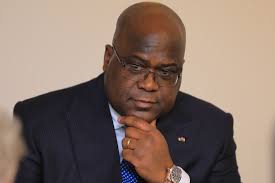
On 16 June, the DRC’s Senate passed a bill that allows changes to the constitutional presidential term limit and duration through a referendum.
- The bill has triggered unrest in the capital, Kinshasa, as the opposition accuse President Felix Tshisekedi of planning to extend his mandate, which ends in December 2028.
- Despite launching a new coalition to challenge the bill, opposition leaders will struggle to sustain regular large-scale protests in the coming year, as they face repression and limited backing from members of the ruling Union Sacree coalition.
- In addition, Tshisekedi has successfully installed his allies in the Constitutional Court, making it difficult for his opponents to legally challenge the bill.
- The backing of the US will embolden the president to push for a term extension, using the persistent conflict in the east to justify a postponement of the next elections, due in December 2028.
- However, given the militarisation of politics in the DRC, this could trigger widespread armed violence in Western parts of the country. Tshisekedi may be forced to shelve his term extension ambitions unless he is able to obtain the endorsement of a large number of politicians in the coming year.
- In any case, the operating environment will become even more volatile from late 2026, as protests, militia activity, and political interference intensify.
Term extension
The bill had been passed in the National Assembly (lower house) on 9 June. It needs to be signed into law by Tshisekedi to become effective. Opposition leaders boycotted the proceedings in the National Assembly, saying that opening up the constitutional term limits/durations would allow Tshisekedi to run for a third term. Moise Katumbi, a prominent businessman who came second at the December 2023 presidential elections, accused Tshisekedi of orchestrating a “constitutional coup” to prolong his tenure. Tshisekedi’s second and final term ends in 2028. After years of speculation about his succession plans, he announced on 6 May that he would “accept” a third term if called upon by the Congolese people. He also warned that the country would not be able to conduct general elections in 2028 if the war in the east is still going on.
Amid this, opposition leaders have launched a protest campaign, including civil disobedience days, to denounce the bill. In the most recent protest in Kinshasa, opposition supporters clashed with police, injuring several people, including Martin Fayulu, a prominent opposition leader. Fayulu, Katumbi, and other opposition figures launched a joint campaign against constitutional amendments. The coalition, dubbed Article 64 Coalition for the Defence of Constitutional Order (C64), is planning another protest on 8 July in Kinshasa.
Uphill battle for opposition
Proponents of the referendum bill claim that the current constitution, promulgated in 2006 after the official end of the Congo wars, is not suited to the DRC’s current political dynamics. The bill also contains an important caveat that should, on paper, prevent the use of a referendum to entrench personal political power: it only allows term limits and durations to be amended in a context of “government dysfunction.”
However, with the absence of government structures in large parts of the country and the resulting protracted security/governance crises, this threshold is easy to attain. In particular, Tshisekedi loyalists can easily argue that the M23 crisis, which has seen the government lose strategic towns/areas in North and South Kivu provinces, constitutes a major dysfunction that would make a nation-wide presidential election almost impossible. They are likely to use this to justify a term extension, especially if the M23 and their allies, Rwanda, manage to capture more territories towards the end of 2027. More importantly and regardless of the extent of the M23’s control by this time, the Constitutional Court, which has ultimate authority over the interpretation of the referendum law, is composed of pro-Tshisekedi figures. In this context, Tshisekedi’s plans to retain power beyond 2028 are unlikely to face significant legal hurdles.
In this context, the opposition will focus on mobilising public opinion and the international community against a constitutional amendment. Domestically, they will tap into growing public frustrations with the persistent conflict in the east and broader socio-economic grievances to destabilise Tshisekedi. Although this will cause a spike in violent protests in urban areas, opposition leaders will struggle to sustain regular large-scale protests. First, most members of the C64, including Katumbi and Fayulu, do not have enough popular support outside their respective strongholds, Katanga, and the east respectively. Although anti-Tshisekedi sentiments are elevated in these regions, organising protests would be difficult in Katanga (due to repression) and counterproductive in the east, where the government is almost entirely absent.
Attempts by C64 leaders to co-opt members of Tshisekedi’s Union Sacree coalition who are reluctant to shelve their own presidential ambitions, such as Vital Kamerhe, will also be largely unsuccessful, at least in the coming year. Endorsing the C64 would threaten these leaders’ access to patronage networks, which have been increasingly monopolised by close allies of Tshisekedi in recent years.
International considerations
Meanwhile, galvanising the international community against a referendum will also not be straightforward. Many Western partners, especially the EU, would in principle be reluctant to endorse a term extension/third mandate amid fears that this could legitimise democratic backsliding. Tshisekedi will leverage the need to ensure the continuity of US critical mineral projects in the DRC to encourage the US, which has become Tshisekedi’s most strategic partner, to adopt a more pragmatic approach. A relatively peaceful referendum would most likely be enough to assuage US concerns over democracy in the DRC.
Armed conflict and stability prospects
In our view, the continued militarisation of politics in the DRC is likely to be Tshisekedi’s most significant hurdle. The state does not have a monopoly on the use of force, and many of his opponents – both within and outside the Union Sacree – have historically used armed insurgency to push their political ambitions. Pushing through with a referendum or term extension without broad consensus among the ruling class could plunge the country into widespread armed violence, especially as Tshisekedi’s detractors step up support for armed groups in Kongo-Central Province and the former Bandundu region (Kwango, Mai-Ndombe, and Kwilu provinces).
Managing this fallout would be difficult for the already overwhelmed security apparatus, especially amid the worsening security crises in the east. In light of these considerations, Tshisekedi would be forced to shelve his term extension ambitions and instead groom a successor if he does not foster some level of consensus by mid-2027. He is likely to focus on co-opting a wide range of political leaders and opposition figures to endorse his referendum plans.
Either way, operators should prepare for a disruptive period characterised by regular violent unrest and targeted assassinations starting in the last quarter of 2026. In addition, militia activity is likely to intensify in Western DRC and sporadic attacks close to Kinshasa cannot be ruled out. Moreover, political interference in the mining, telecommunication, and logistics sectors will intensify, as Tshisekedi and his allies target the business interests of his opponents.
Sources
“DRC: The opposition announces a march on July 8 to demand Tshisekedi’s resignation” Actulite.cd
“DRC referendum bill intensifies constitutional standoff” DW
For tailored analysis on the likelihood of a presidential term extension in DRC, please contact Africa Investigates Incorporated.
Email: africainvestigates2020@gmail.com
Tel: +221785282247